
Introduction: Facing a Tough Decision? You’re Not Alone
There’s a unique kind of heartache that comes with realizing your home—your sanctuary, your investment, the place where countless memories have been made—might need to be sold for less than you owe.
If you’re here, you might feel overwhelmed, even a little lost, by the thought of navigating Florida’s short sale process. But take a deep breath—you’re not alone, and you have more options (and support) than you might think.
This quick guide to the short sale process in Florida, complete with a step-by-step visual overview, is designed specifically for home-sellers like you. Whether your property is a luxury estate, a cozy single-family home, a condominium, or even a vacation getaway, understanding this process can empower you to move forward with clarity and confidence.
What Is a Short Sale, and When Should You Consider One?
A short sale happens when you need to sell your property, but the market price is less than the balance you owe on your mortgage. In a short sale, your lender agrees to accept less than the total owed. This process can help you avoid foreclosure, ease financial stress, and start anew—with fewer long-term repercussions on your credit.
Is a short sale right for you? Take the Quiz now and find out. (Opens in a new window)
If you’re facing financial hardship, life threw you some wild curves, or need to relocate quickly, it’s worth exploring. The key is knowing the steps—and having a trusted professional by your side.
Short Sale Process with Pictures, Explained: A Florida Seller’s Visual Guide
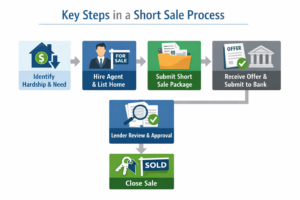
Let’s walk through the short sale process, step by step. Use this as your Florida short sale process:
Step 1: Recognizing the Need & Contacting a Real Estate Professional

Action Tip:
If you’re struggling to make payments, reach out to an experienced real estate agent specializing in short sales. Early action opens up more options and allows you to work proactively, rather than reactively.
Expert Insight:
Choose an agent with local Florida market expertise. They’ll know how to position your property competitively—whether it’s a luxury waterfront home or a cozy downtown condo.
Step 2: Gathering Financial Documentation

Action Tip:
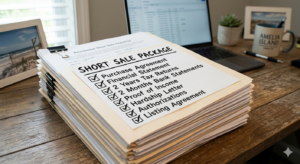
Your lender will ask for proof of hardship. Collect recent bank statements, tax returns, pay stubs, and a detailed hardship letter outlining why you can’t continue making payments. (Don’t want the emotional stress of writing a letter? Use my Hardship Letter Generator Tool to take that task off your plate.
Expert Insight:
You have to qualify for a short sale. Being thorough and prompt with documentation can speed up the process and demonstrate your commitment to resolving the situation. You can download my free Document Checklist.
Step 3: Listing the Property & Marketing the Home

Action Tip:
Your agent will list your property at a price that reflects current market value, even if it’s below your mortgage balance. Strategic marketing is key—targeting local and out-of-state buyers, and highlighting features like updated interiors, proximity to shopping, and unique amenities.
Expert Insight:
In Florida’s competitive market, well-presented properties—whether luxury, single-family, or vacation homes—tend to attract more offers, even as short sales.
Step 4: Receiving and Negotiating Offers
Action Tip:
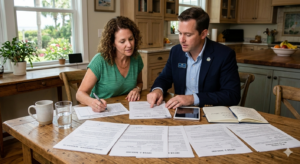
Once offers come in, your agent will help you evaluate them, focusing not just on price but on terms (like cash offers, inspection timelines, and contingencies). The best offer is often the one most likely to close.
Expert Insight:
In short sale situations, time is of the essence. Buyers willing to move quickly and waive certain contingencies can make the process smoother for everyone.
Step 5: Submitting the Short Sale Package to the Lender
Action Tip:
Your agent submits the accepted offer, your hardship letter, financial documents, and a comparative market analysis to your lender as a complete short sale package.
Expert Insight:
Incomplete or disorganized packages are the number one reason for delays. Rely on a detail-oriented agent who knows exactly what Florida lenders expect.
Step 6: Lender Review and Approval

Action Tip:
Be patient. Lenders may take weeks (sometimes months) to review your file, order their own appraisal, and decide whether to approve or counter the offer.
Expert Insight:
Your Realtor will follow up regularly, but don’t panic if things move slowly. Your agent should communicate updates often and keep you informed at every stage.
Step 7: Closing the Sale

Action Tip:
Once approved, closing usually happens within 30–45 days. You’ll sign final documents, transfer ownership, and receive a formal release from your mortgage obligation.
Expert Insight:
With Florida’s unique timeline and legal process, having a real estate professional familiar with local closing practices is crucial to avoid last-minute surprises.
Short Sale Process Flowchart: Quick Guide Snapshot
Here’s a simplified visual guide to the entire Florida short sale process:
Quick Tips for Navigating Your Florida Short Sale
- Act Quickly: The sooner you start, the more likely you’ll avoid foreclosure and protect your credit.
- Choose the Right Agent: Experience with the short sale process and local Florida knowledge can make all the difference.
- Stay Organized: Keep all documentation in one place, and respond to requests promptly.
- Communicate Transparently: Honesty with your agent and lender builds trust and ensures smoother negotiations.
- Prepare Emotionally: Letting go isn’t easy. Lean on your professional team and focus on your next chapter.
Frequently Asked Questions: Florida Short Sale Visual Guide
Q: Can I live in my home during the short sale process?
A: Yes, most sellers remain in their homes until closing.
Q: Will a short sale hurt my credit?
A: While it does impact your credit, the consequences are generally less severe than foreclosure.
Q: Are luxury properties and vacation homes eligible for short sale?
A: Absolutely. Short sales are possible for all property types, including condominiums, single-family, and vacation homes.
Q: Do I have to pay taxes on the forgiven debt?
A: Consult with a tax advisor, as some forgiven debt may be taxable in certain situations. You can get a general idea by going to my Potential Tax Impact Estimator.
Next Steps: Ready to Take Control of Your Short Sale Journey?
Navigating the short sale process in Florida can feel daunting, but you don’t have to face it alone. With the right support, you can move forward with dignity, minimize financial impact, and begin your next adventure—whether that’s downsizing, relocating, or simply getting a fresh start.
If you’re considering a short sale or just want to understand your options, reach out today for an expert consultation. As a local real estate professional with years of experience helping Florida homeowners—across luxury properties, single-family homes, condos, and vacation homes—I’m here to guide you, step by step, every single day.
Contact me now for your personalized 100% confidential short sale strategy call and let’s turn uncertainty into opportunity—together.
Need more information?