


Thinking about selling your Florida home?
The excitement of moving forward often collides with a wave of paperwork and surprise expenses—especially when you discover something called the “documentary stamp tax” on your closing statement. For many sellers, this little-known property transfer tax can spark anxiety and confusion.
But here’s the good news: With the right knowledge and a strategic approach, you may be able to qualify for valuable documentary stamp tax exemptions and keep more money in your pocket.
Let’s walk through what every Florida home seller needs to know about doc stamp tax law, exemption rules, and—most importantly—how you can take smart, legal steps to minimize or avoid paying the documentary stamp tax.
What Is Florida’s Documentary Stamp Tax?
Picture this: You’re in the final stretch of selling your single-family home, luxury condominium, or vacation property. The buyer is thrilled, your real estate agent is pulling together the last details, and then you see a line item called “documentary stamp tax”—often simply called “doc stamps”—on your estimated closing statement.
This property transfer tax is charged by the State of Florida on deeds and certain other documents that transfer an interest in real property. For sellers, this means that whenever you sell or otherwise convey real estate in the Sunshine State, you’re typically responsible for paying doc stamps. The tax rate is based on the property’s sale price or the consideration paid.
For many, the amount can feel substantial—especially in high-value transactions or luxury residential sales. But before you resign yourself to this expense, let’s explore which transactions are exempt from stamp tax and how you might qualify for documentary stamp tax exemptions.
Why Understanding Stamp Tax Exemptions Matters to Home Sellers
It’s easy to overlook documentary stamp tax exemptions in the rush of a sale, but doing so can cost you thousands of dollars. Here’s why it’s worth your attention:
- Protect Your Bottom Line: Every dollar saved in taxes means more proceeds in your pocket at closing.
- Strategic Planning: Knowing the rules can help you structure your sale for maximum financial advantage.
- Peace of Mind: No one likes surprise costs. Understanding your exemptions means fewer last-minute headaches.
Let’s break down the key exemption rules, mortgage exemption requirements, and the stamp tax exemption process—so you can move forward with confidence.
What Transactions Are Exempt from Documentary Stamp Tax?
Before we move on to the next section, it’s a CYB time. Disclaimer: This article is for informational purposes only and does not constitute legal advice. Always consult with a licensed real estate attorney or CPA professional for guidance specific to your transaction.
While most property transfers in Florida are subject to the documentary stamp tax, the law recognizes several important exemptions. Here’s what every home seller should know:
1. Transfers Between Spouses
If you’re transferring property solely between spouses—such as during a marriage, divorce, or as part of estate planning—Florida law provides exemptions from documentary stamp tax in many circumstances. For example:
- Adding or removing a spouse from the deed (with no outstanding mortgage) usually qualifies for exemption.
- Transferring property as part of a divorce settlement may also be exempt, provided no new money changes hands and certain legal requirements are met.

2. Certain Intra-Family Transfers
Transfers without consideration (meaning, you’re not being paid) to certain family members, such as to a revocable trust or from an individual to their own wholly owned entity, may be eligible for documentary stamp tax exemptions—provided specific legal standards are satisfied.
3. Corrective Deeds
If you need to correct an error on a previously recorded deed (such as a misspelled name), a corrective deed may be exempt from doc stamp tax, as long as no additional consideration is exchanged.
4. Transfers to or from Government Entities
Deeds involving federal, state, or local government bodies are generally exempt from documentary stamp tax.
5. Personal Representatives and Estate Transfers
Transferring property from a deceased person’s estate to heirs is often exempt, provided the transfer meets statutory conditions and no payment is involved.
Important Note: There are numerous exceptions and fine details. Exemptions do not always apply if a mortgage remains or if consideration is paid. Always verify your unique situation with a Florida real estate expert.
Can I Avoid Paying Documentary Stamp Tax? How to Qualify for Exemption
If you’re wondering how to qualify for documentary stamp tax exemption, you’re not alone. Here’s an actionable, step-by-step guide for home sellers:
Step 1: Identify Your Transaction Type
Start by determining the nature of your property transfer. Is it a traditional sale, a transfer to a family member, a deed correction, or something else? Certain exemption rules only apply to specific transaction types.
Step 2: Review the Mortgage Status
The presence of an outstanding mortgage is a critical factor in whether you can qualify for exemption. In many cases, if you transfer a property with an existing mortgage, doc stamp tax may apply to the mortgage amount—even if no other money changes hands.
Mortgage Exemption Requirements:
- Transfers that are exempt from doc stamp tax on the deed may still incur tax if there’s a mortgage, unless the law specifically provides an exemption.
- For example, in some spousal transfers, if the grantee spouse assumes the mortgage, stamp tax could be owed on the mortgage balance.
Step 3: Gather Documentation
To support your request for exemption, you’ll need precise records, such as:
- A copy of the deed
- Any relevant marriage certificates, divorce decrees, or trust documents
- Documentation of mortgage payoff or assumption (if any)
- Written agreements explaining the non-sale nature of the transfer
Step 4: Complete the Exemption Affidavit
For most exemptions, you must submit a formal affidavit or statement—often provided to your closing agent or title company—explaining the basis for your exemption under Florida law.
- The affidavit must be signed and, in some cases, notarized.
- Your title company or attorney can assist in preparing the correct language.
Step 5: Submit Your Paperwork at Closing
Provide all exemption documentation to your title company, attorney, or closing agent well before closing day. They will file the necessary forms with the county clerk and Florida Department of Revenue to secure your exemption.
Step 6: Follow Up (If Needed)
Occasionally, questions arise after closing. Keep copies of all documents as proof of your exemption status. If you receive a notice indicating unpaid stamp tax, respond promptly with your records.
The Stamp Tax Exemption Process: What to Expect
Navigating the stamp tax exemption process can feel intimidating, especially in high-value or complex residential sales. Here’s what to expect when you team up with a seasoned Florida real estate professional:
- Early Identification: Your agent or attorney flags potential exemptions as soon as you decide to sell or transfer property.
- Document Review: They review your transaction details, mortgage status, and supporting paperwork to ensure eligibility.
- Affidavit Preparation: The team prepares all required affidavits and submits them well before closing day.
- Follow Through: If any questions or challenges arise, your professional advocate steps in to resolve them with the county or state.
Real-World Insights: Why Expert Guidance Matters
The rules around documentary stamp tax exemptions are nuanced and evolving. Even experienced home sellers can be tripped up by the fine print—especially in Florida’s dynamic real estate market, where luxury property sales and complex ownership structures are common.
- Legal Nuance: What qualifies as “consideration”? Does a mortgage payoff count? These are legal questions with big financial consequences.
- Local Market Knowledge: Some counties may have specific requirements or practices.
- Timeliness: Missing a required form or deadline can cost you your exemption—and thousands of dollars.
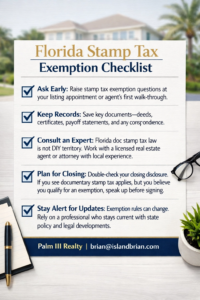
Pro Tips for Sellers: Maximize Your Savings, Minimize Stress
- Ask Early: Raise stamp tax exemption questions at your listing appointment or agent’s first walk-through.
- Keep Records: Save key documents—deeds, certificates, payoff statements, and any correspondence.
- Consult an Expert: Florida doc stamp tax law is not DIY territory. Work with a licensed real estate agent or attorney with local experience.
- Plan for Closing: Double-check your closing disclosure. If you see documentary stamp tax applies, but you believe you qualify for an exemption, speak up before signing.
- Stay Alert for Updates: Exemption rules can change. Rely on a professional who stays current with state policy and legal developments.
Next Steps: Your Path to a Stress-Free Closing
If you’re ready to sell your Florida property—whether it’s a coastal condo, a luxury home, or an investment residence—understanding your rights around documentary stamp tax exemptions can make a remarkable difference in your financial outcome.
Don’t leave money on the table or risk costly surprises. Reach out to a seasoned Florida real estate professional who will:
- Analyze your specific situation
- Identify exemption opportunities
- Guide you through every step of the stamp tax exemption process
Take the next step: Contact me today for a personalized, confidential consultation and discover how you can maximize your proceeds and enjoy a smooth, stress-free closing.
Ready to sell? Have questions about Florida’s documentary stamp tax exemptions? Call or email me now—let’s make sure you keep every dollar you deserve when it matters most.
Disclaimer (Again): This article is for informational purposes only and does not constitute legal advice. Always consult with a licensed real estate attorney or CPA professional for guidance specific to your transaction.